From Biodiversity to Community: Reflections from a Student Sustainability Architect

Rosie Shaw, Student Sustainability Architect
As an MSc Biodiversity and Conservation student, I applied to the Student Sustainability Architect role hoping to develop new skills and gain practical sustainability experience alongside my degree. I am passionate about sustainability and connecting people with nature but when I started my role with the Sustainable Garden project in November 2025, I had very little experience in gardening, growing food, or helping to run volunteer sessions. The Sustainable Garden was one of several projects available through the Sustainability Architect role, and looking back, I would not have wanted to work on any other project.
The Sustainable Garden: new perspectives through partnership
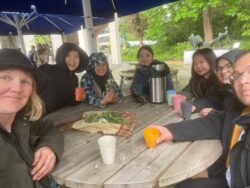
The Sustainable Garden was relaunched in 2024 through a partnership between the Sustainability Service and Incredible Edible Meanwood. Every Wednesday 1-3pm, volunteers come together to grow food, maintain the garden, learn new skills and take a break from studying. My role involved helping to plan and deliver these sessions led by Caroline Scott from Incredible Edible. Caroline plays a huge role in shaping the garden, and working so closely with her was one of the most valuable aspects of my time as a Sustainability Architect.
Before starting my MSc in Biodiversity and Conservation, I completed an undergraduate degree focused on Environmental Change and Sustainability, and while my studies helped me understand sustainability in theory it can often feel overwhelming when you try to apply this to everyday actions. Whereas working alongside Caroline provided me with a completely different perspective. Caroline’s knowledge comes from years of experience in community gardening, growing food, foraging and engaging people with nature, and these are all actively applied in the Sustainable Garden. Through working with her, I gained a much greater understanding of how sustainability can actually be applied to a real project for the benefit of both people and nature.

Community gardening for connections and curiosity
As a biodiversity and conservation student, I was naturally drawn to the wildlife, habitats and environmental benefits of the garden, but the Sustainable Garden is just as much about people. Throughout the year, I met volunteers from all over the university, including undergraduate and postgraduate students, staff, alumni, and members of the wider community. Volunteer data collected over the year showed that the most common reason for attending was for personal wellbeing and enjoyment, followed by wanting to make a positive impact and meet new people. Through talking with volunteers, it was easy to see that the garden provides not just a space for people to connect with nature but also with other people. Each volunteer also brings their own experiences and perspectives to the garden, which creates a collaborative environment where everyone is able to contribute and learn.
I was also encouraged to contribute my own interests and knowledge during my time at the garden. I am particularly passionate about biodiversity and insects, and I was able to bring these into my role by sharing information about the many insects we spotted around the garden and highlighting the ways in which we can make the garden more wildlife friendly. I also had the opportunity to deliver an insect hotel workshop where we collected materials, such as twigs, pine cones, bamboo and dried leaves, from around campus and constructed an insect hotel from recycled wooden pallets. While we were building, we also discussed the benefits of insects for the garden through pollination and decomposition, as well as the importance of the garden itself in providing important habitat and food for wildlife. I really enjoyed delivering this session and sharing my interests, and since I am hoping to pursue a career in biodiversity and conservation, having the opportunity to lead this session and apply my knowledge in a practical setting was particularly rewarding.
Learning beyond the classroom
The Sustainable Garden would not exist in the same way without the partnership between the University of Leeds Sustainability Service, Incredible Edible Meanwood, Caroline, and all of the incredible volunteers who contribute not just their time but also their knowledge and perspectives. Throughout my time on the project, I gained skills, experience and confidence that I would not have developed through my degree alone, as well as a broader understanding of sustainability in practice. I joined the project hoping to contribute my passion for biodiversity and conservation, and upon finishing the project I have gained a much deeper appreciation of community, growing food, and the value of bringing together people with different experiences and perspectives to make meaningful changes.
Reflecting on my experience has also highlighted one of the strengths of the Student Sustainability Architect programme itself. Every year, a new Sustainability Architect joins the project with different interests, academic backgrounds and experiences. My background in biodiversity and conservation encouraged me to focus on connecting people to the garden’s wildlife and creating habitats to support the garden’s biodiversity. A future Sustainability Architect is likely to bring different interests and perspectives, and through this ongoing exchange of knowledge between Caroline and the Sustainability Architects, the sustainable garden can continue to evolve.
We use the United Nations Sustainable Development Goals (SDGs) as a framework to guide our activity. Our work in the Sustainable Garden is linked to the following SDGs:
- SDG 3: Good Health and Wellbeing
- SDG 4: Quality Education
- SDG 11: Sustainable Cities and Communities
- SDG 15: Life on Land
- SDG 17: Partnerships for the Goals