Nature Recovery, Policy, and Place: Reflections from a Leeds PhD Student
Nature recovery has become a key agenda in addressing biodiversity loss, climate resilience, and community-wellbeing, particularly in urban areas. Over the past few years, the Positive Impact Partnership with Hyde Park Source (an environmental charity dedicated to improving peoples’ health and wellbeing through improving the environment) has demonstrated how dedicated community groups feel to improving their local environments. However, because conversations often focus on ecological practices rather than policy frameworks, people can feel unsure about how their work fits into the wider landscape of strategies, plans, and responsibilities that exist across different levels of governance.
To help make sense of the nature recovery policy landscape for community action, the Positive Impact Partners programme supported Hyde Park Source to collaborate with the Leeds Institute for Societal Futures through their PGR placement scheme. We were delighted to welcome Xiaojia Lyu to the partnership, who is a PhD student in the School of Education. She dived deep into 38 policy texts that shape nature recovery in Leeds and across the UK to explore a key question: how do national, regional, local, and neighbourhood policies conceptualise nature recovery, and what role do they assign to communities in delivering in? She found that although policies consistently position communities as central to delivering nature recovery, the role they are expected to play is often left vague, revealing a gap between the language of participation and the realities of governance.
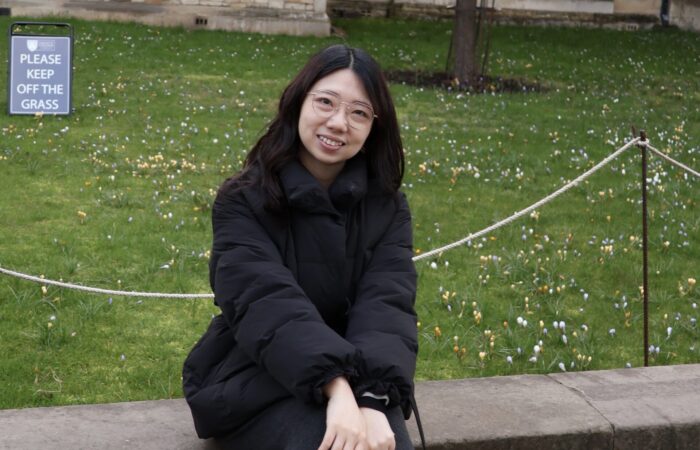
Xiaojia Lyu, PhD student in the School of Education
Below, she shares her reflections on the experience of being involved in the partnership, from uncovering the discursive construction of “community” in policy to finding her own sense of connection with the city through our work together.
Project Overview
Rather than working directly with communities, Xiaojia’s contribution focused on critically analysing policy texts to uncover how different levels of governance conceptualise nature, community, and participation. This process helped build a comprehensive picture of the nature recovery landscape in Leeds and beyond, revealing how policy language shapes the inclusion (or exclusion) of communities in environmental decision-making. “This project has deepened my understanding of environmental governance, not only as a technical system but as a space of negotiation, narrative, and identity. It has shown me the value of bridging empirical policy work with critical reflection, and the importance of interdisciplinary, multi-scalar research approaches.”
Reimagining Neighbourhoods and Finding Belonging as an International Researcher
One of the most meaningful aspects of the project was the unexpected sense of belonging it fostered for Xiaojia. As an international student newly arrived in Leeds, she shared that “reading through neighbourhood plans and city strategies helped me visualise the city through the eyes of its residents. Places like Alwoodley, Seacroft, or community parks mentioned in planning texts became more than names. They became imagined landscapes filled with civic ambition, ecological concern, and place-based identity. Through policy documents, I encountered the everyday spaces that matter to local communities and the aspirations they hold for their environment. This textual immersion allowed me to connect with Leeds in a reflective, grounded way. It helped me better understand the social fabric of the city I live in, and my own position within it - not just as a researcher, but as a temporary resident and observer.”
Growing Methodologically and Academically: Lessons Learned
Xiaojia shares that this project provided her first hands-on experience with critical discourse analysis. “I learned how to examine the deeper structures of language - how policies construct authority, assign responsibility, and legitimise specific actions or actors. The hybrid analytical framework [used to analyse the policies] enabled me to move beyond surface meanings and explore recurring storylines, stakeholder positions, and missing voices in the texts. It was eye-opening to see how discourse shapes the realities we act upon, and how power can be maintained not just through decisions, but through the way problems and solutions are framed.”
She shares that working with Pete Tatham and Dr. Rebecca Brunk was a formative aspect of this experience. “As experienced project leaders with strong community ties and extensive practice-based knowledge, they brought grounded perspectives that complemented my academic lens. Their openness to including my work as part of a larger interdisciplinary effort made me feel both supported and intellectually challenged. As an international PhD student still learning the institutional, cultural, and environmental landscape of the UK, I valued their guidance not only in shaping research directions, but also in navigating real-world complexities that rarely appear in academic texts.
At the same time, I was able to offer policy-focused insights and contribute analytical clarity to the broader project. This reciprocal relationship helped strengthen my confidence as a researcher and reminded me of the value of co-learning across different forms of expertise.”
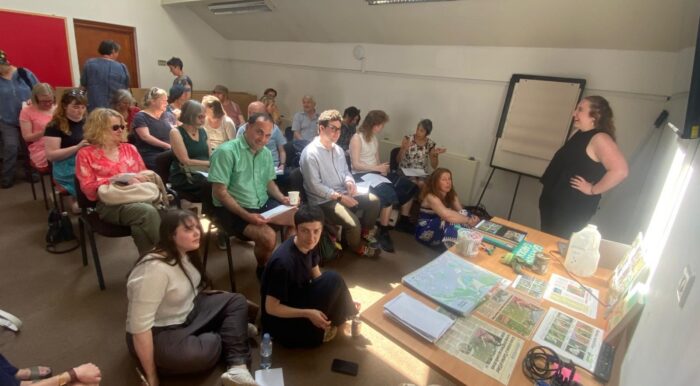
Nature Recovery and Connection Conference
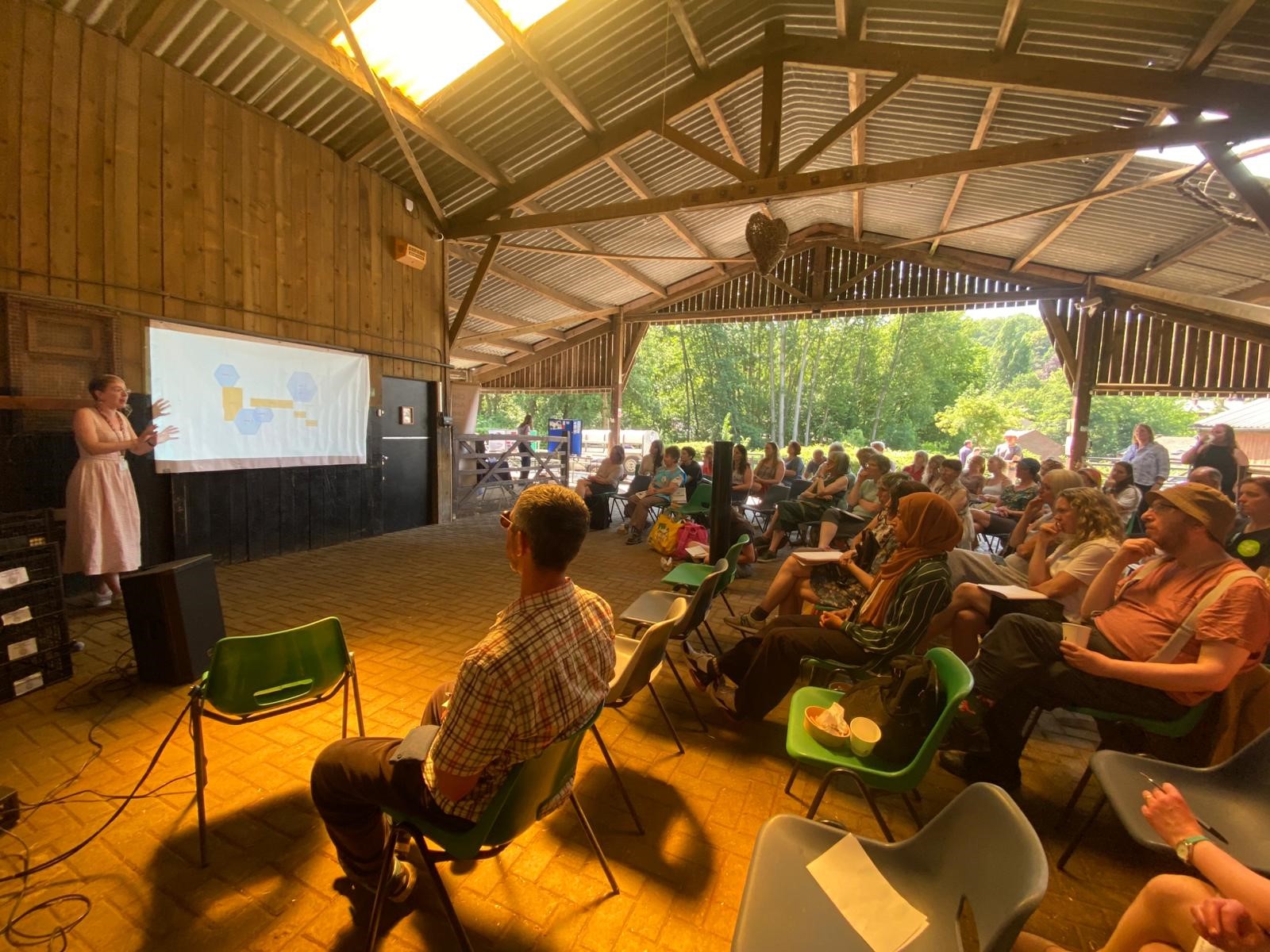
Xiaojia’s analysis has already had a meaningful impact on the wider project. In June 2025, Pete and Dr. Rebecca Brunk presented her findings to a full house at last year’s Nature Recovery and Connection Conference, as part of the Leeds Climate Action Festival. The session attracted a wide range of participants, from community organisers and environmental practitioners to local and regional policymakers and representatives from local authorities. Her work provided a grounding for rich discussions about the current policy landscape and the gaps between community aspiration and the formal structures that shape nature recovery.
These insights have also contributed to emerging conversations with the West Yorkshire Combined Authority, where we are exploring how community engagement might be embedded more meaningfully in the development and delivery of Local Nature Recovery Strategies. Her work has opened important questions about power, participation, and governance that will continue to shape our next steps.
If urban nature recovery and community environmental governance interest you, the Nature Recovery and Connection Conference is happening again this year! Join us in July by sign up here to attend.
We use the United Nations Sustainable Development Goals (SDGs) as a framework to guide our activity. This work is linked to the following SDGs:
- Goal 11: Sustainable Cities and Communities
- Goal 15: Life on Land
- Goal 17: Partnership for the Goals
Find out more about our impact on the SDGs